
Most bonsai pass through more than one pair of hands. This Scots pine (Pinus sylvestris) has been through at least four, and every one of them left a mark you can still see.
Kentucky-grown
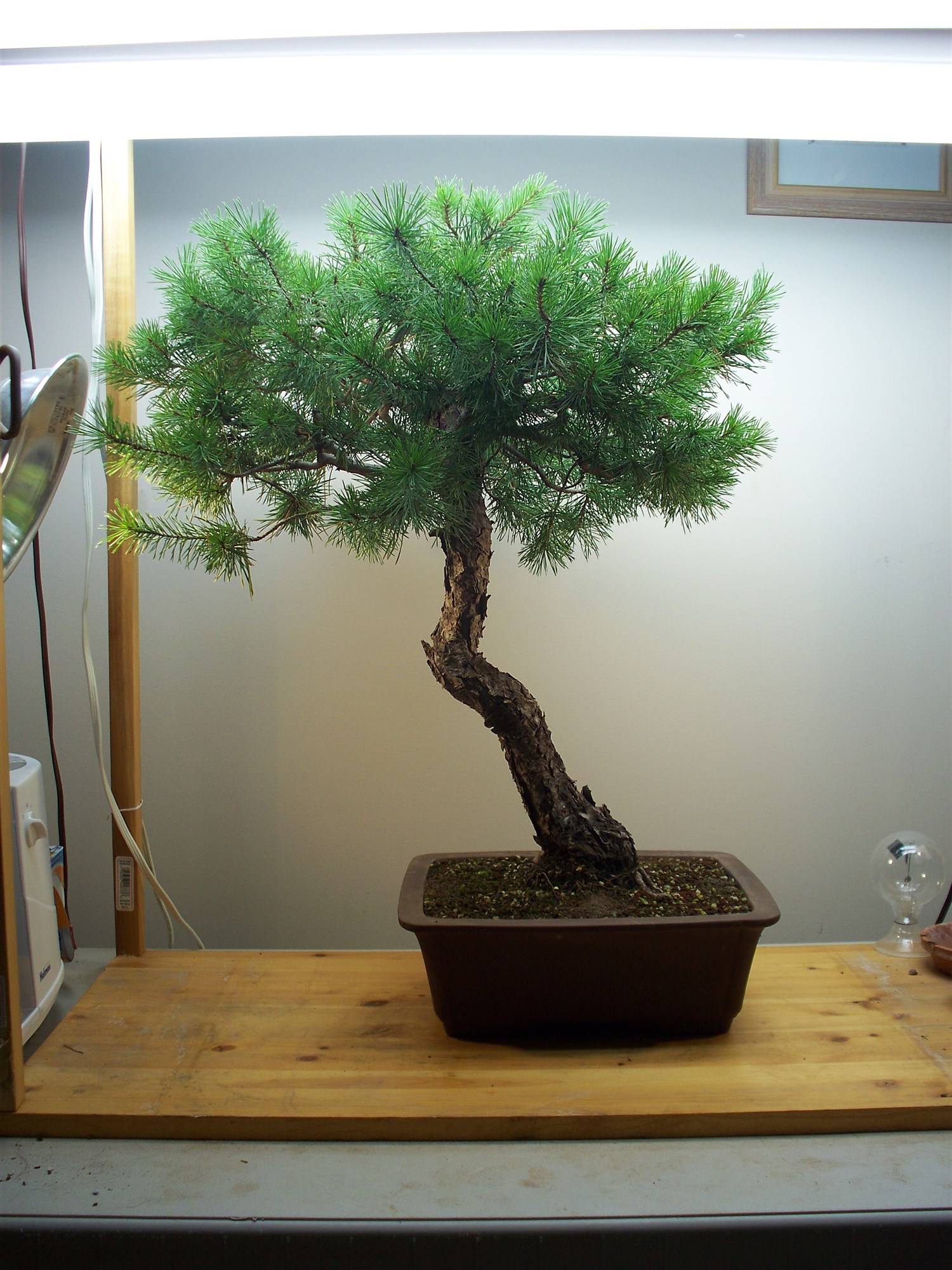
It was grown by Tommy McCurry, a Kentucky native. If I remember right, he planted these back in the 1980s, and I bought this one from him as rough stock. It had a trunk with real movement and bark, and a canopy that had been allowed to do whatever it liked.
Akio Kondo sets the bones
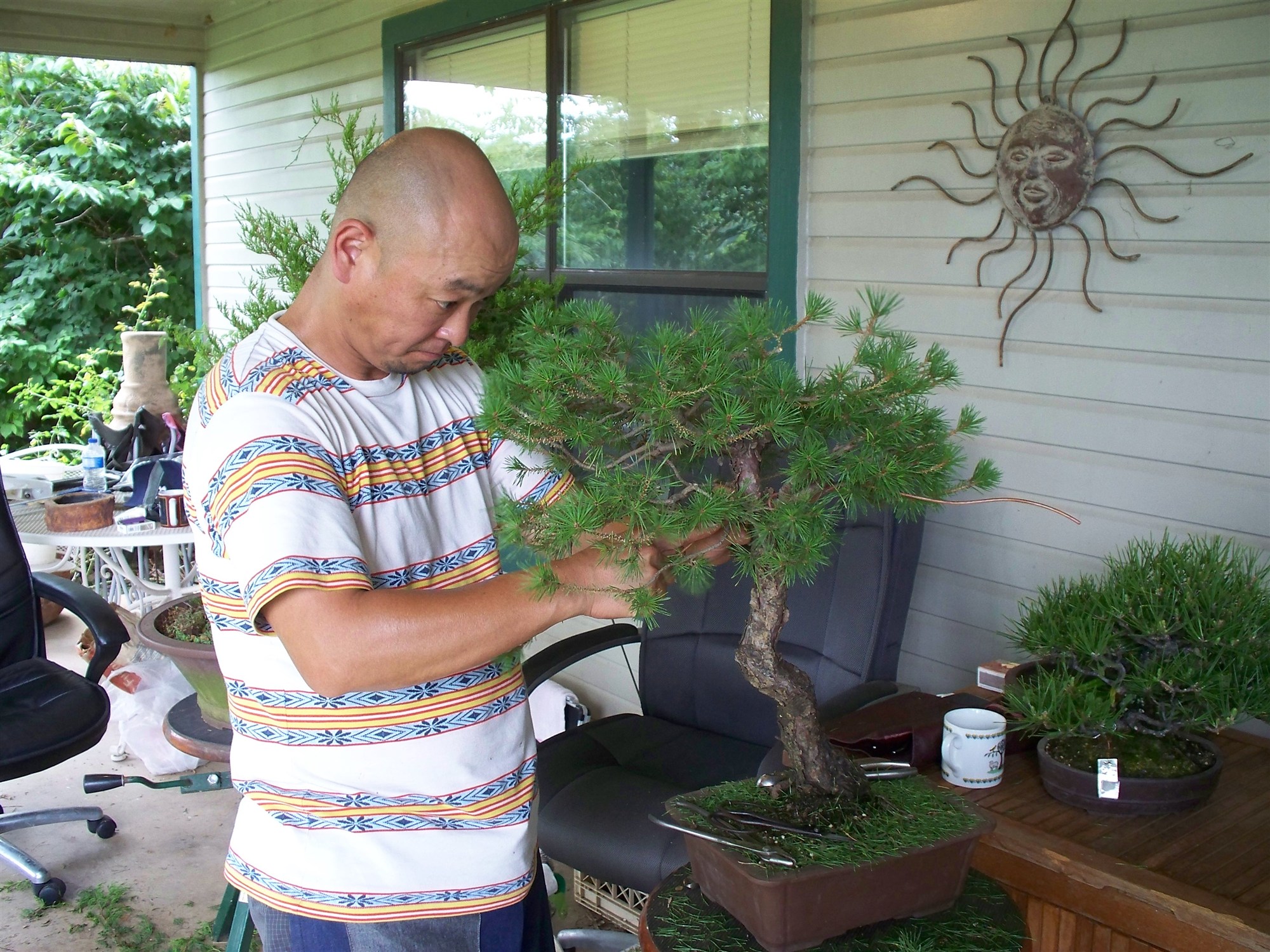
That summer I took it to my friend John Kirby’s in Arkansas, where Akio Kondo was visiting. Akio is a Kokufu award-winning artist from Japan. He was Kihachiro Kamiya’s first apprentice, and Boon’s senior at Kihachi-en, where they both studied. I wrote about that weekend at the time.
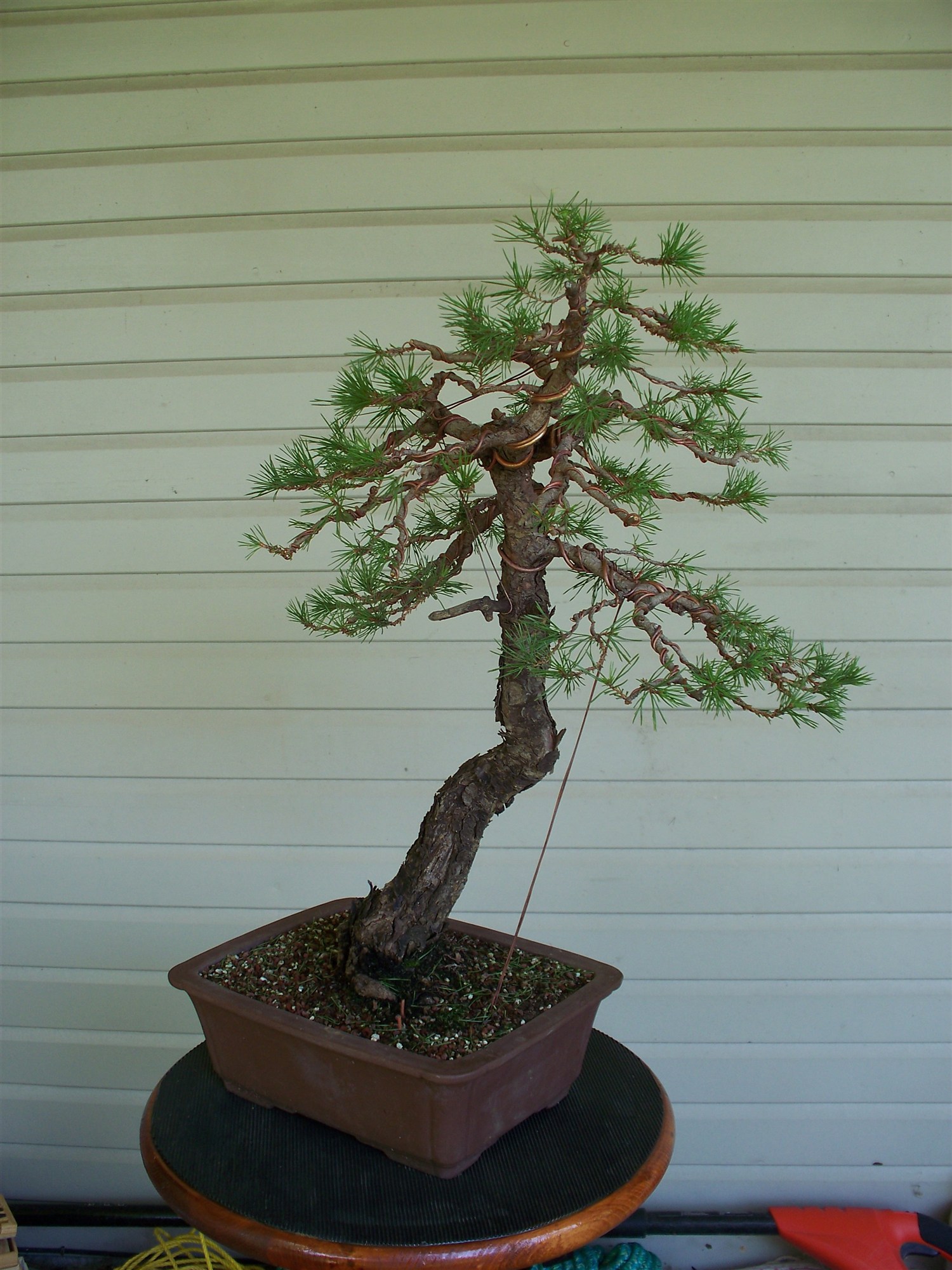
Akio set the bones: he chose the branches the tree would keep, removed the rest, and wired what was left into its first real structure. On a tree this age that’s the hardest decision in its whole life, because whatever comes off doesn’t come back.
The move I remember is the apex. Rather than keep the old top, Akio brought one limb up to form a new one. Compare the before and after: the tree’s whole silhouette hangs on that decision.
Refining with Peter Tea
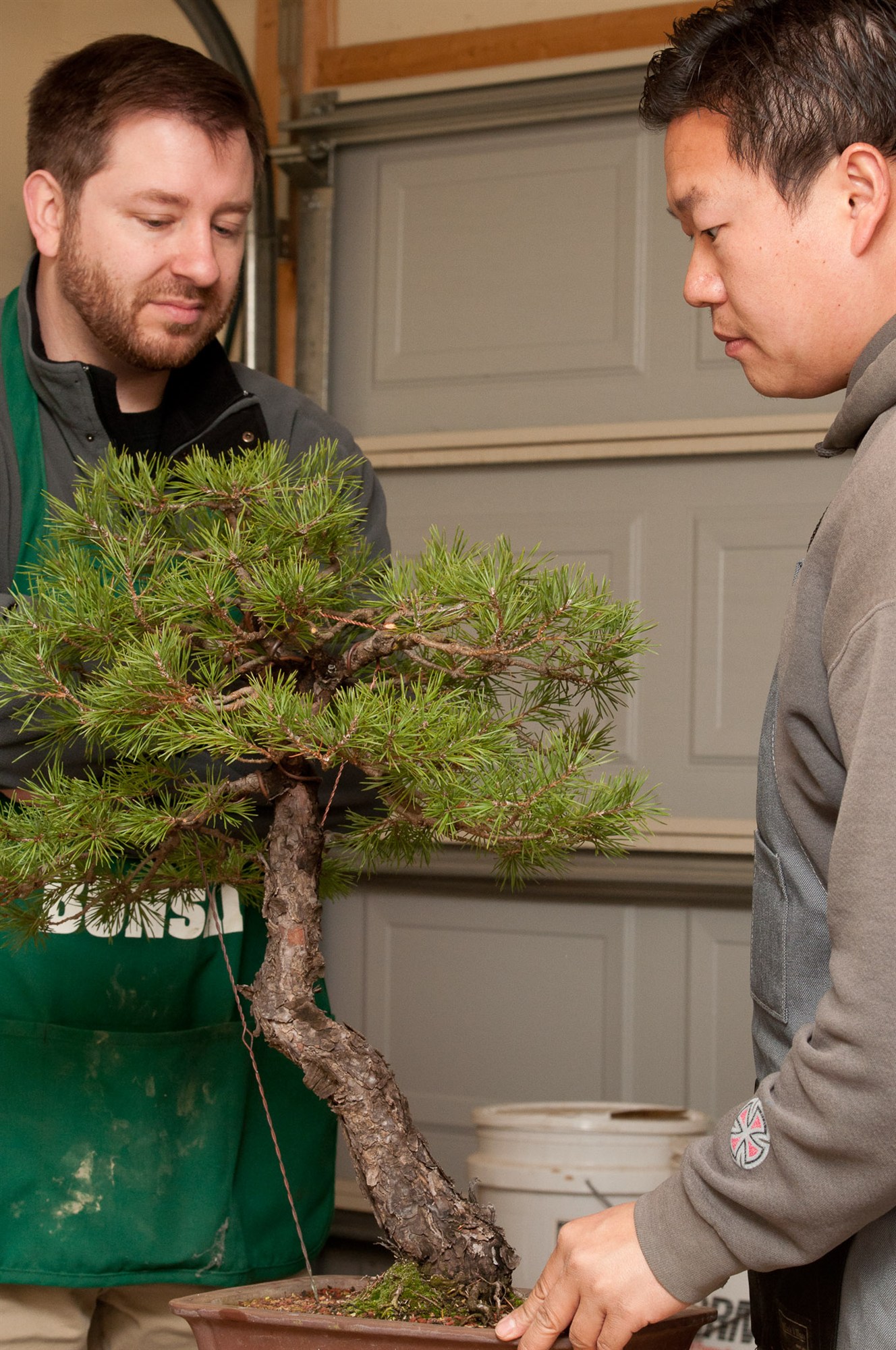
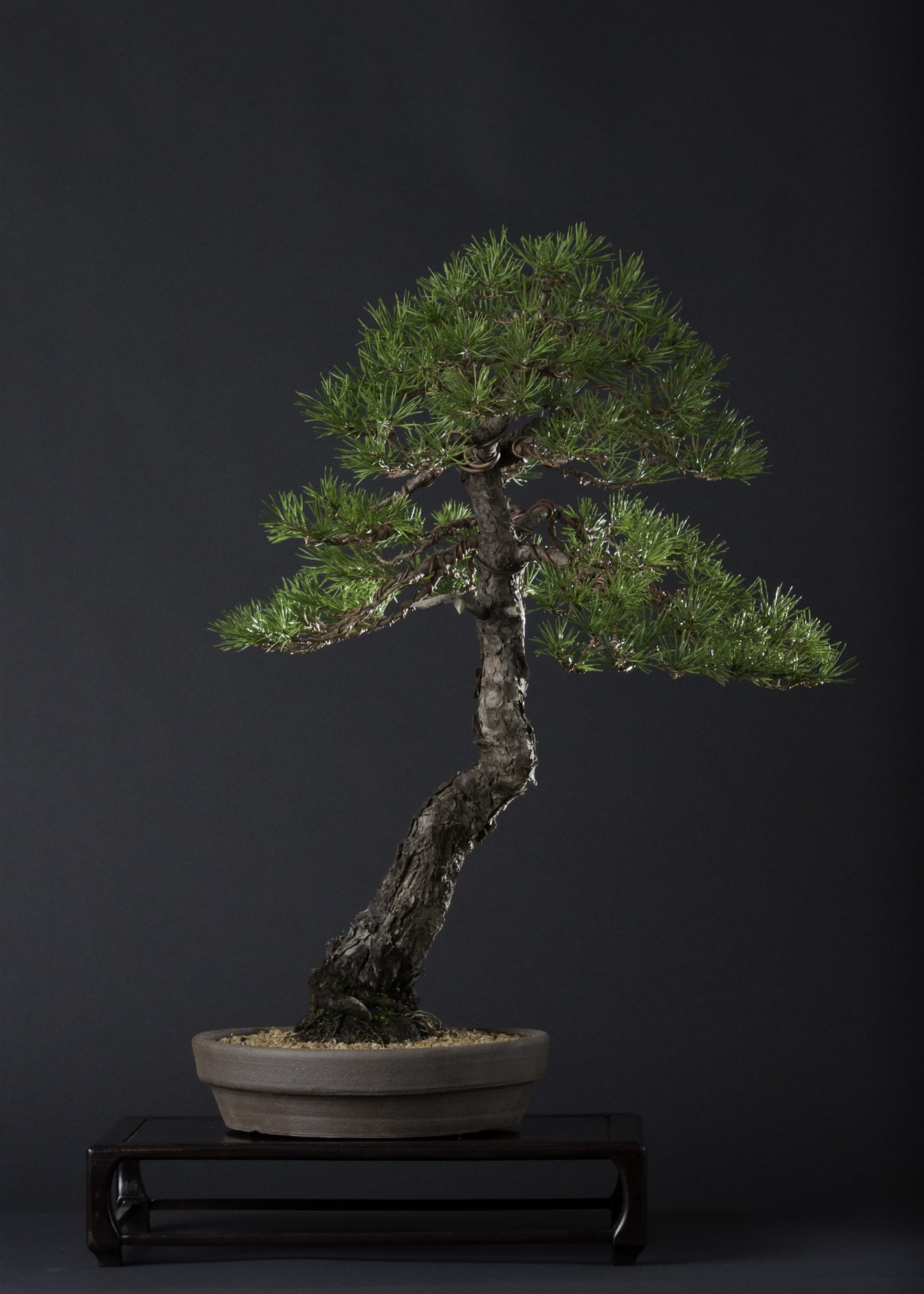
In winter 2011 Peter Tea came to visit, the same visit that produced my posts on grafting with Parafilm and the black pine approach graft. We spent part of it on this tree, and the work was refinement. Akio’s structure was already there, so the job was building it out: rewiring, and shaping the branches into pads.
How Scots pine differs from black pine
A Scots pine isn’t a black pine with different needles. It makes one flush of growth a year, so there’s no decandling: if you cut a Scots pine’s candles in early summer, you’ve cut that year’s growth, and you don’t get a second flush to replace it. Balancing its strength happens in spring instead, by shortening the strong candles while they’re still extending.
On display
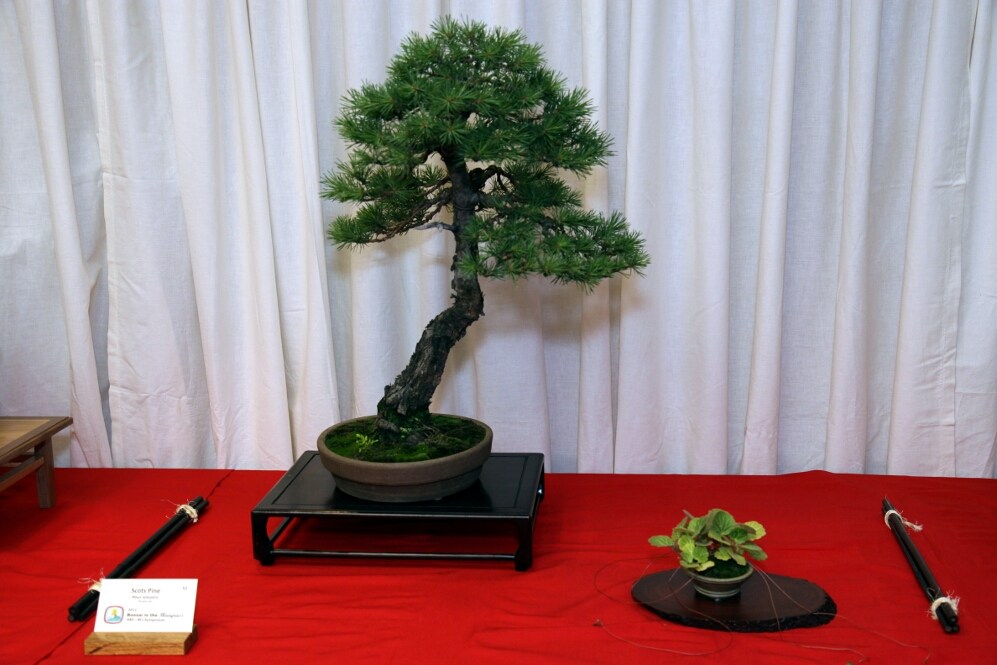
That summer it was on display at the ABS/BCI convention in Louisville, the joint convention of the American Bonsai Society and Bonsai Clubs International. Two years after Akio set the bones, it was ready to be looked at.
Where it lives now
When I moved to Florida in 2015, Russ, one of my study group students, took ownership of it. It now lives with him at Twisted Nature Bonsai in Louisville, Kentucky. Grown in Kentucky by Tommy McCurry, set by Akio Kondo in Arkansas, refined with Peter Tea, and back home in Kentucky.



Leave a Reply