 Skip to content

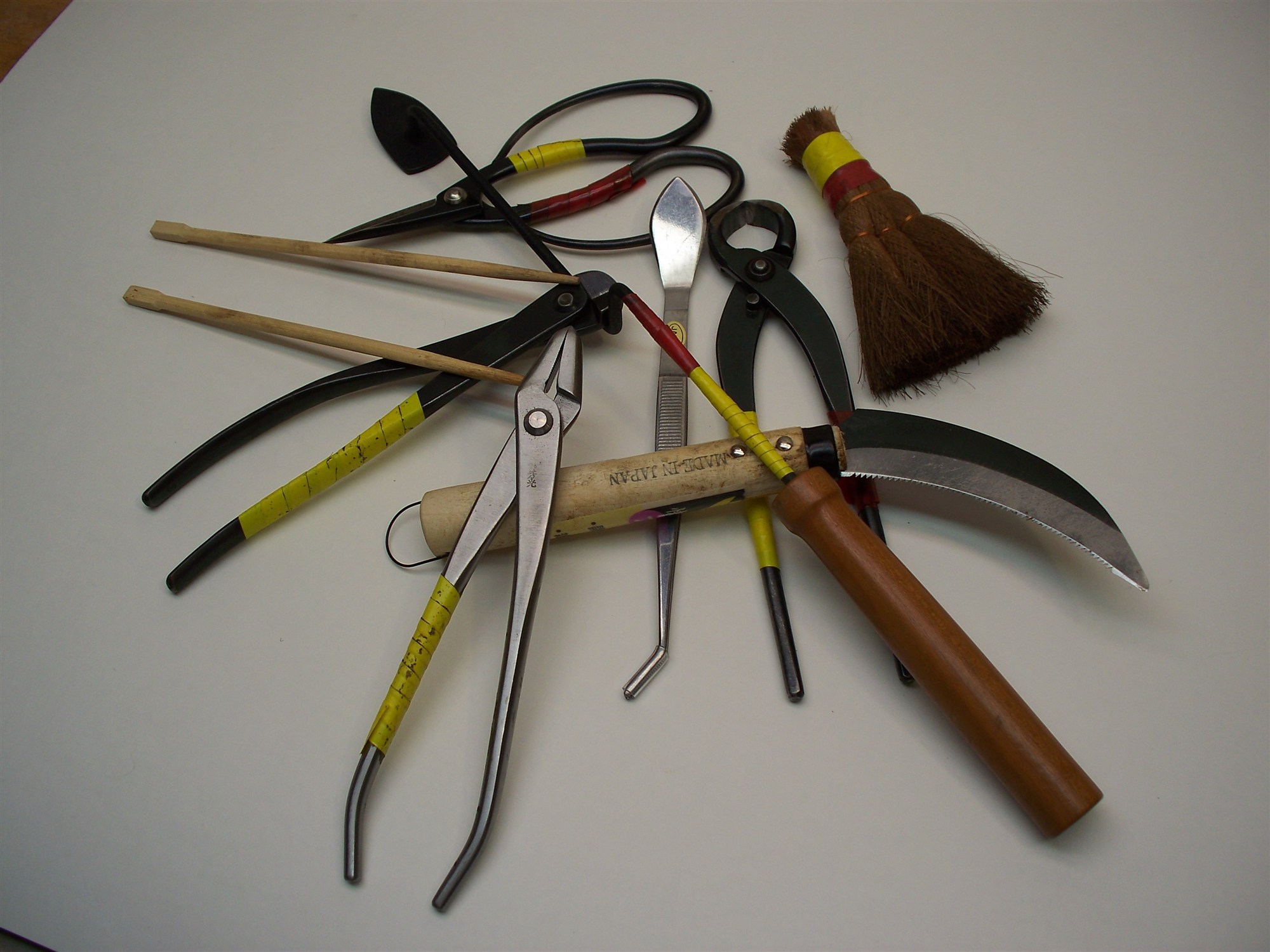
A beginner’s tool kit is usually bought as a boxed set, and the box usually holds a few tools you’ll use every week and a few you won’t touch for years. Here’s the kit I’d start with, what each tool is for, and what can wait.
The examples are black pine, because that’s most of my bench, but the kit works for almost anything.
The starter kit
Fine trimming scissors. For cutting candles and needles. Narrow blades reach into a cluster of new shoots without catching the needles you meant to keep. Use them on foliage only: every cut through wood or wire takes away some of the edge that delicate work depends on.
Heavier shears. For branches and roots. Having a second, heavier pair means the fine scissors are never forced through wood, which dulls them and springs the blades apart.
A concave cutter. It takes a branch off flush with the trunk and leaves a slightly hollow wound that heals flat.
Wire cutters and copper wire. I wire pines with annealed copper. It goes on soft and stiffens as you bend it, and it holds better than aluminum of the same thickness, which matters against the spring of young pine wood. Keep a range of thicknesses, and get cutters that can reach tight against the bark, so you can cut wire off without nicking the branch.
Tweezers. Most needle pulling needs nothing but your fingers. Tweezers are for the pads too tight for fingers, and for combing roots out at repotting. Generic medical tweezers are a good, cheap substitute for bonsai tweezers.
A chopstick. For working fresh soil in among the roots when you repot: push it in and shake it sideways rather than stirring. Nothing does it better, and nothing is cheaper.
A sickle. For cutting the rootball free of the pot’s sides, so the tree lifts out without you levering on the trunk.
A root rake and a root hook. The rake works the bottom of the rootball flat, and the hook combs the sides and surface outward.
What can wait
A knob cutter and a saw. You’ll want these once you’re taking off heavier branches, including sacrifice branches. By then the concave cutter is meeting wood it wasn’t made for. The knob cutter handles heavier stubs, and the saw takes what’s too thick for either.
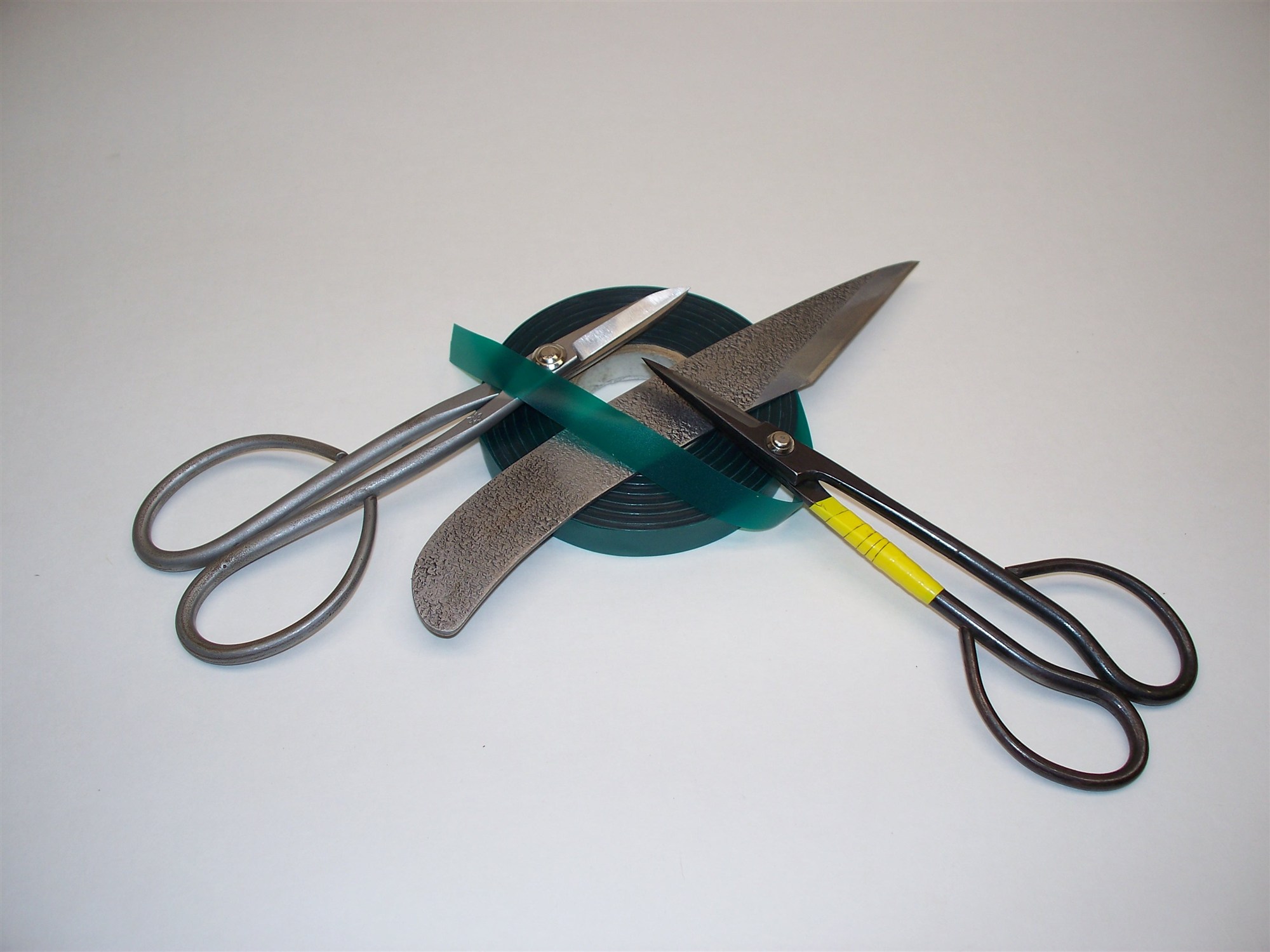
A grafting kit. A grafting knife, parafilm, grafting tape, and cut paste. Hold off until you actually graft. Most people reach for grafting earlier than they need to, and owning the kit doesn’t change that.
Buying and looking after them
I prefer stainless steel. It doesn’t rust or corrode as easily, and bench tools live around water. If you want to know what the hardness number on a listing means, I’ve written about what HRC means on a bonsai tool.
Keep blades clean and sharp. A sharp blade cuts cleanly, and a dull one crushes the wood, which heals worse. A good sharpening kit helps you get that edge and keep it.
I sterilize between trees only when one of them has a known fungal problem, such as needle cast or tip blight, because that’s when a blade can carry it from one tree to the next. And I use cut paste on grafts and large cuts, not on candle cuts or small pruning, which the tree handles on its own.
No tool will save a cut made at the wrong time of year. But a short kit, kept sharp, covers nearly everything a pine will ask of you in its first several years.
Header photo: my kit in 2010.


Leave a Reply